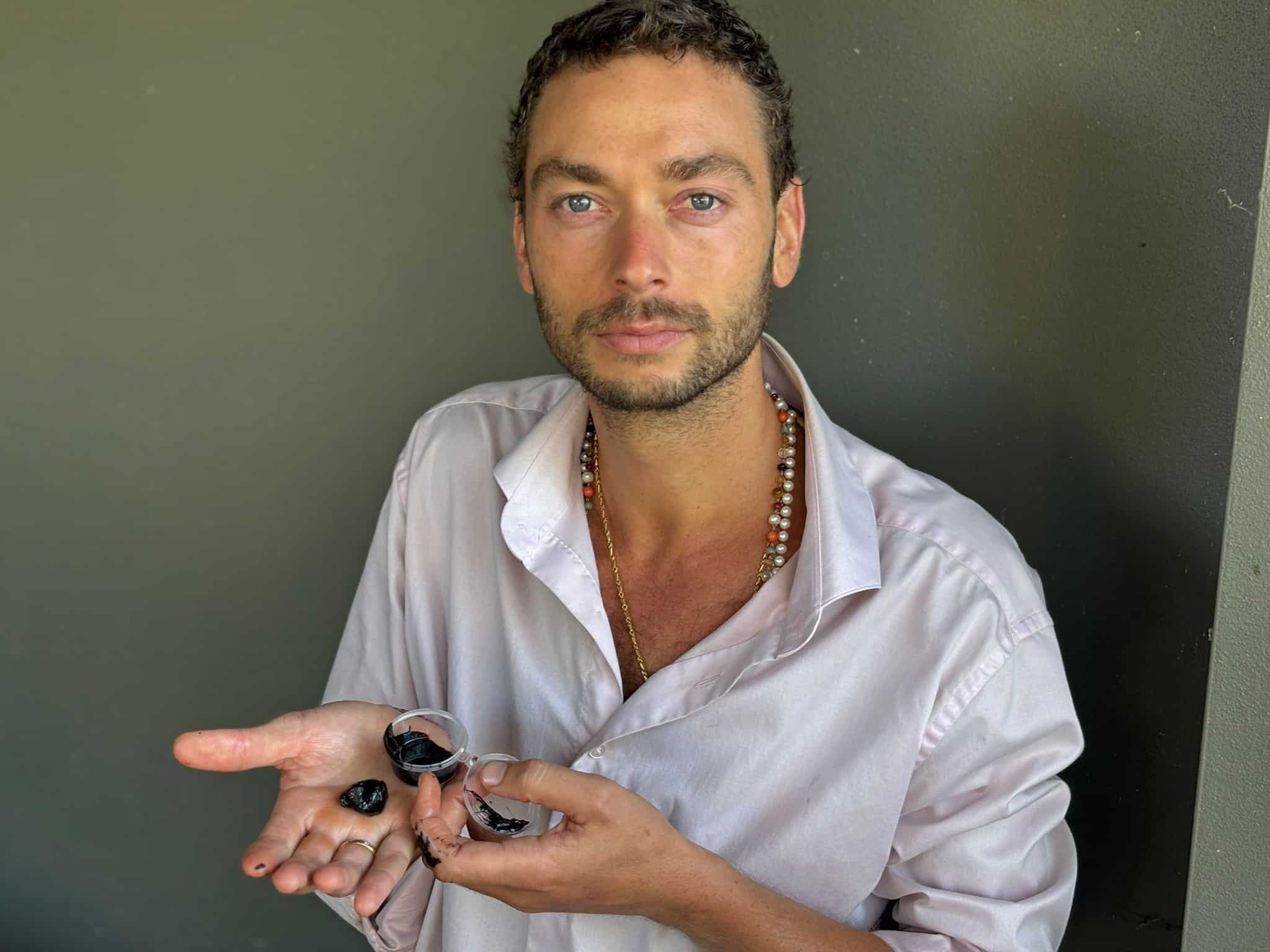





Nick Heath, aka The Breathing Diabetic, is utilising simply breathing techniques to manage and improve his type 1 diabetes – a medical condition that requires 24/7, 365 days/year attention.
But simply shifting your breathing mannerism has other health benefits beyond just healthy blood sugar levels.
Nick is a breathing nerd. Heโs hooked on breathing. And the beautiful thing is that heโs not an extremist, but ratherย shares very practical interventions and subtle adjustments to your way of living (breathing) that has the potential to significantly heal and prevent imbalance + and optimise overall health.
We dispel the myths of oxygen is good and carbon dioxide (C02) is bad.
We explore the Nobel prize winning panacea molecule that is freely available to you, how to optimise your exercise, sitting and walking practice + much more!
Take a deep calm belly breath through the nose and get ready to dive deep into the realms of oxygen, breath and our fundamental life-force.
ABOUT OUR GUEST: NICK HEATH
Nick Heath Ph.D., a.k.a. The Breathing Diabetic, was diagnosed with type 1 diabetes at the age of 11.
At age 30, he began practicing simple breathing exercises that helped improve his blood sugars, improve his sleep, and increase his energy levels, all of which helped him better manage his diabetes.
Having a background in scientific research, Nick wanted to understand the inner workings of breath to not only be able to explain the reason behind the changes he was experiencing, but to exploit and push the boundaries of breath therapy.ย This curiosity led him on a deep quest to understand the science behind breathing its implications on the human physiology.
By means of the The Breathing Diabetic platform he generously shares and breaks down complex pieces of wisdom for all to understand and make use of.

Nickโs formal education is in atmospheric science, and he is also a certified Oxygen Advantage instructor.
IN THIS EPISODE WE DISCUSS:
Contentsย ย hideย
Nickโs Early History with Type 1 Diabetes
He was diagnosed with Type 1 diabetes at 11 years old.
At the age of 25 he started wondering what habits he could implement that would positively influence his capacity to regulate blood-sugar levels.
-
Little by little he startedย changing his nutrition, and his energy levels and long-term averages of his blood sugars started to improve.
After that he was intrigued by the lengths to whichย meditation, yoga and breathworkย practices could allow him to attenuate and/or eradicate his diabetes.
Up to this pointย he has managed to reduce his insulin injections in 40-45% while keeping stable blood-sugar levels.ย
Why Put In The Effort When There’s Insulin Out There?
Diabetes is not merely a nuisance in terms of having toย inject insulin, but it also often turns into a liability due to its proven relationship to variousย long term complications, andย emotional/mood instabilityย (since blood sugar tempers with your brain chemistry therefore severely affecting mood & emotional health).
Over time,ย diabetes can damage the heart, blood vessels, eyes, kidneys, and nerves.
According to the World Health Organization:
-
Adults with diabetes have aย two-to-three-fold increased risk of heart attacks and strokes.
-
Diabetes is the cause ofย 2.6% of global blindness.
-
Diabetes is among theย leading causes of kidney failure.
Being able toย have a grip on your health and taking some control back from the diseaseย is very empowering and allows for an increased wellbeing & peace of mind.
The Relationship Between Oxygen and Carbon Dioxide In The Body
Carbon dioxide (CO2) is the molecule that indicates to our body it is time to breathe.
-
Theย inhaling of air is triggered by the body sensing high levels of carbon dioxide, not low levels of oxygen.
Carbon dioxide loosens the bonds between the oxygen molecules and hemoglobin in red blood cells, which allows for the assimilation of those oxygen molecules into the cells of our tissues.
In breathwork techniques such asย pranayamaย (เคชเฅเคฐเคพเคฃเคพเคฏเคพเคฎ), we are tough to reduce the volume of our breaths, which causes an increase in CO2ย levels, which in turn allows more oxygen to enter the cells.
Intermittent hypoxia
This practice consists of a person or animal going throughย alternating periods of normoxia and hypoxia.
-
Normoxiaย is defined as exposure to regular oxygen levels andย hypoxiaย as any oxygen levels lower than those of normoxia
This practice teaches your body how toย withstand higher levels of CO2, which is going toย allow you to breathe less air and more effortlessly in your everyday life.
Although holding your breath for too long can lead to a lowering of oxygen saturation, when done in a controlled manner it can be very therapeutic.
-
It can help withย insulin sensitivity.
-
It can help withย immune function.
The spleen contracts and triggers red-blood cell production to increase oxygenation, which in turnย increases oxygen assimilationย and energizes you.

There is a type of breathwork in which people take light inhales with deep exhales and then hold their breath while walking or jogging. This increases carbon dioxide levels to extremes and gets their body in a very acidic state which induces a lot of stress in the body and mind.
-
Many athletes practice this to increase their level of performance.
The Wim Hof Method
It basicallyย consists of hyperventilating the body, which increases your pH to alkaline levels & severely reduces carbon dioxideย concentration in the body.
-
Since high carbon dioxideย levels are the triggering stimuli for breath, lowering these in that manner allows for an extended period of time in which the body doesnโt feel the need to breathe.
What happens then is that oxygen-blood saturation in the body plummets to about 50% due to a lack of carbon dioxide.

The Many Benefits of Nasal Breathing
Nasal breathing reduces your breathing volume naturally, soย by teaching yourself to breathe through your nose consistently you will be able to breathe less and more efficiently.
The turbinates in your nose filter out pollutant particles and cilia (microscopic hairs) move said particles out of your sinuses and back into your nose so that they donโt make it down into the lungs; as opposed to the mouth which doesnโt have such a complex filtering system.
Nitric oxideย is a gas thatโs released in your nasal cavity.
-
It not only hasย antibacterial & antiviral properties, but also acts as aย vaso-dilatorย when the air enters your lungs (opens up blood vessels andย improves blood flow, thus oxygen assimilation [which in turn leads to higher energy levels]).
Nasal breathing can be of great help to those suffering from ailments such as acidity, reflux, or any other upward-moving condition (ลชrdhvaย เคเคฐเฅเคงเฅเคต in Sanskrit).
Meditation & Breath
When meditating your body enters into a hypometabolic state, where thereโs a reduced oxygen concentration & an increased carbon dioxide levels.
-
Experiencing this regularlyย teaches your body how to adapt to low-oxygen availability and high carbon dioxideย levels, basically allowing your physiology toย do more with lessย resources.
Mouth Taping
It is a life-altering practice for those who are chronic mouth breathers.
It forces you with very little to no inconvenience, to breathe nasally during the night, which allows you to harness all the benefits of nasal breathing.
Mouth taping assists entering deep sleep.

It decreases the incidence of obstructive sleep apnea.
Breath becomes much more regular and consistent when happening through your nose, as opposed to through your mouth.
Treating Asthma With Breathwork
Nickโs mentor and world renown author and breath practitioner, Patrick McKeown, was asthmatic and yet by the power of breath he taught his body to tolerate higher levels of carbon dioxide, which helped him quit inhalers and all the asthma-medication he was taking.
Theย Buteyko Method, originally formulated by the Soviet doctor Konstantin Pavlovich Buteyko, consists of the use of chronic repetitive breathing exercises to correct hyperventilation and hyperventilation-related conditions (such as asthma).
Treating Diabetes With Breathwork
The autonomic nervous system (ANS) is composed of three main branches: the sympathetic (in charge of fight-or-flight responses), parasympathetic (in charge of rest and digest responses) and enteric nervous systems.
-
In most cases of diabetes, the sympathetic nervous system is substantially more active than the parasympathetic.
-
This causesย blood sugar to fluctuateย a lot,ย stressย to be heightened,ย ย sleep quality to be poorย andย cardiovascular complications, amongst many other possible ailments.
-
Breathwork reduces the level of activity of the sympathetic nervous system, hence severely contributing to returning the autonomic nervous system to balance.
-
-
The stress alone of merely being concerned by oneโs own diabetes every single day, all day, is long-term very straining for the body.
-
It is therefore important to be equipped withย tools and techniquesย that allow one toย take back some controlย without needing to depend on any external source/context for relief or sustenance.
Diabetes-related ailments mainly surge from a poorย regulation of blood-sugar and improper blood circulation, andย those two health fields are the onesย breathworkย practicesย manly affect.ย
Tissue oxygenationย being one of the main issues that lead to diabetic complications.
-
Theory is thatย diabetics get less oxygen delivered to their cells, which leads to insulin resistance & chronic sympathetic (fight-or-flight) activation.
-
By practicing breathing techniques that optimize gas exchange, carbon dioxide levels, and give you nasal nitric oxide (which improves oxygen assimilation into the cells), you are preventing many of these possible diabetes-related complications.
Simple Breathwork Practices
Slow Breaths:ย 4 seconds inhalation, 6 seconds exhalation, through the nose only. After two minutes you should get a feel of how it starts to affect you.
-
This is a good place to start for anybody, even children.
Then thereโs simpleย pranayamaย techniques such as alternate-nostril breathing.
Phone apps you can use:
-
iBreathe
-
Breath Wrk
-
Details on the giveaway of a 1 year-subscription down below in โResourcesโ.
-
โBreathwalkingโ:ย Counting your steps with your breath is a common easy-to-apply practice for starters on breathwork.
-
e.g. 4 steps during inhale, 6 steps during exhale (or whatever number feels comfortable)
-
For diabetics, walking after meals helps with blood-sugar spikes.
RESOURCES
Nickโs Websiteย HERE
Nickโs Instagram (@thebreathingdiabetic)ย HERE
Nickโs email (nick@thebreathingdiabetic.com)ย HERE
–
Buteyko Clinicย HERE
To access the giveaway (these are cumulative):
- Post in your IG Story the IG post related to this episode & mention one takeaway.
- Comment one takeaway on the IG post related to this episode.
- Leave a review on any podcast-listening platform, screenshot it and email the screenshot toย media@vitalveda.com.au.ย
SUPPORT THE SHOW
Pleaseย leave me a comment belowย (I love to read every single one).
SUBSCRIBE
iTunes, Spotify,ย Sticher,ย Google Play