

Kitchari: The Essential & Delicious Ayurvedic Dish

When your body needs a rest, this is the meal that gives it one. Kitchari (khichdi) is soft, warm and easy to digest, the dish Ayurveda turns to for cleansing, for recovery, and for the days you want to feel light and clear again. Babies eat it, elders eat it, and so do people deep in a cleanse.

Kitchari is very easy, simple and quick to cook, and very nutrtional!

Two recipes below. Start with the everyday one. The traditional one is lighter to digest, for when you want the deepest reset.
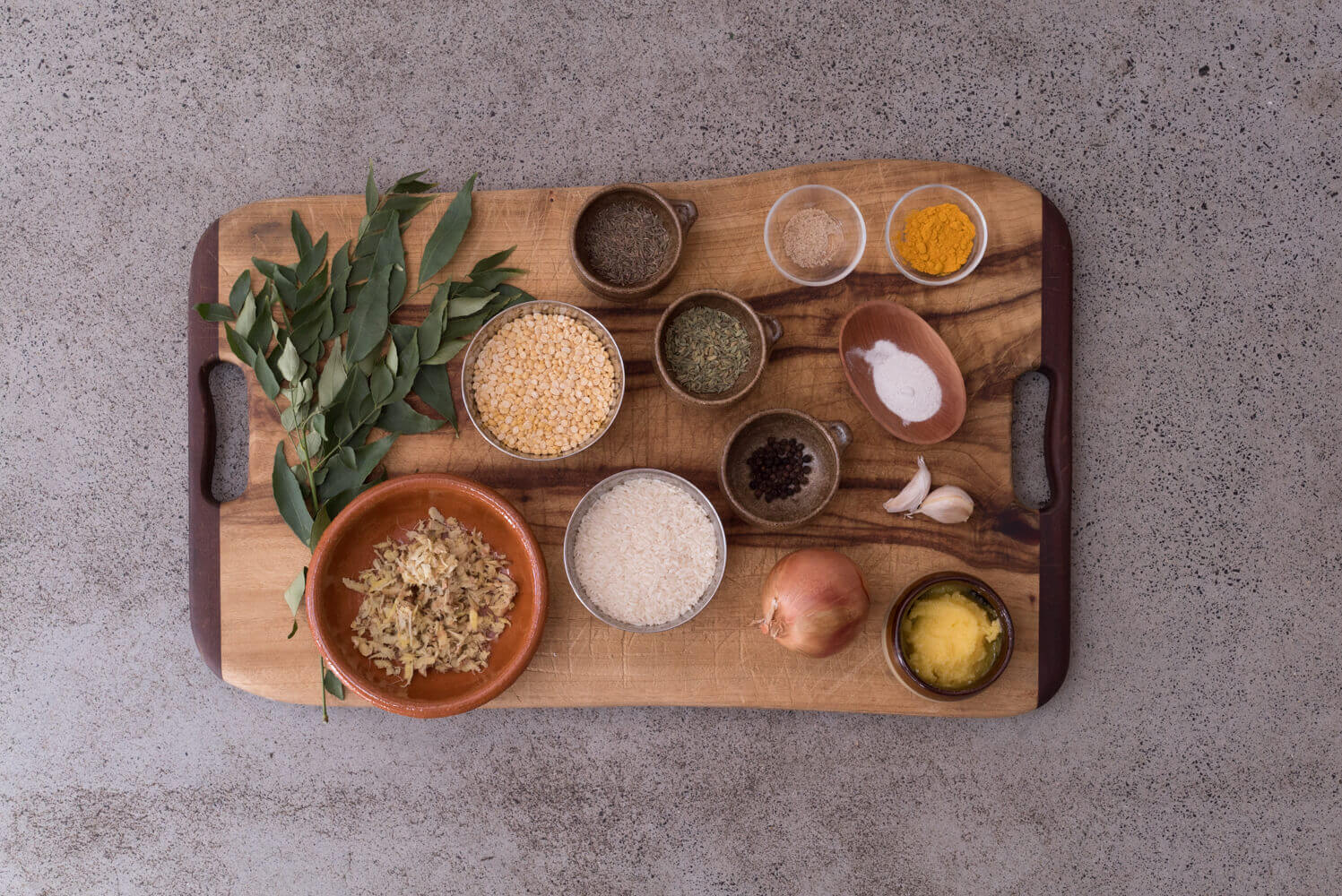
Kitchari ingredients: mung dahl, rice and Ayurvedic spices

The Everyday Adaptable Kitchari

This is the one I cook most. Whole green mung and a wholegrain, gentle spices, and vegetables if you have them. Nourishing enough to live on for a few days, simple enough to make on a weeknight.

Serves 2

What you need

  • 1/2 cup whole green mung beans
  • 1/2 cup wholegrain: brown rice, red rice, millet, barley or buckwheat (not white rice, not quinoa, save those quick-cooking grains for the traditional version below)
  • 2 tbsp ghee (or coconut oil)
  • 1 tsp cumin seeds
  • 1 tsp coriander, whole seeds or seed powder
  • 1 to 3 tbsp fresh ginger, grated
  • 1/2 tsp turmeric powder
  • A pinch of black pepper
  • 1 tsp salt
  • 5 to 6 cups water


Optional, and worth it:

  • Onion and/or garlic, finely chopped, for warmth and flavour
  • A root vegetable, any you like: sweet potato, beetroot, carrot or pumpkin, chopped small
  • A green vegetable, any you like: dandelion leaves, blanched spinach or beetroot leaves, silverbeet, broccoli, zucchini
  • More spices (reccommended): fennel seeds, mustard seeds, 5-10 curry leaves (ripped in half), big pinch of asafoetida (hing)
  • To finish: fresh coriander and a squeeze of lemon

How to make it

  1. Rinse the mung and grain, then soak overnight, or minimum for 2 hours. This makes them lighter to digest.
  2. Drain, add to a pot with the water, and simmer until soft and porridge-like, around 20 to 45 minutes. Add more water if it thickens too much.
  3. If you are using a root vegetable, add it partway through so it cooks through with the grain.
  4. While that cooks, warm the ghee in a seperate pan. Add the cumin, coriander and any optional seeds. When they sizzle and smell fragrant, add the curry leaves (optional), when they pop, then add ginger, the onion and garlic if using, and cook until soft and lightly golden.
  5. Then add the powders: turmeric, pepper, powdered spices if you are using and salt, and take it off the heat before the turmeric burns.
  6. Put that tarka (spices fried in ghee) into the pot of kitchari and stir.
  7. Turn off the heat, stir your leafy greens through, and let the residual warmth soften them.
  8. Serve with fresh coriander and lemon.

Make it your own. The spices above are the staples. Once you have them down, add what you have and what your body asks for.

The Traditional Kitchari

Lighter, plainer, and the easiest of all to digest.

This is the classic cleansing kitchari: split mung, white rice, spices & ghee, no vegetables. When digestion is weak, post surgery or birth, or you want a deepe resst, this is the one.

Serves 2 to 3

What you need

  • 1/2 cup split yellow mung dahl
  • 1/2 cup white rice (sona masuri or a local white rice), or quinoa if you prefer (not traditional but adapt to your needs and habitat)
  • 1 to 2 tbsp ghee
  • 1 tsp cumin seeds
  • 1 tsp coriander, seed or powder
  • 1 to 3 tbsp fresh ginger, grated
  • 1/2 tsp turmeric powder
  • A pinch of black pepper
  • 1 tsp salt
  • 4 to 6 cups water

Optional: a small handful of leafy greens stirred through at the end, and fresh coriander with lemon to finish.

How to make it

  1. Rinse the mung and rice, then soak for 2 to 8 hours.
  2. Drain, add the water, and simmer until soft, around 25 to 30 minutes.
  3. Temper the spices in ghee as above, then stir them through.
  4. If you like, stir leafy greens through at the end, off the heat.
  5. Finish with coriander and lemon.

A note on ratios

Equal parts mung and grain suits most people. If your stools are loose or your gut feels inflamed, use more rice than mung. If you feel depleted or constipated, use more mung than rice. Soaking helps either way.

Why Kitchari Works

Kitchari does something most meals cannot: it nourishes you deeply while asking almost nothing of your digestion. That is the whole point. During a cleanse, when you are unwell, or after travel has thrown you off, your body has more energy to repair when it is not busy breaking down a heavy meal.

Mung beans are prized in Ayurveda as the lightest and most balancing of the legumes, gentle on the gut where heavier beans sit and ferment. Paired with a grain, they also form a complete protein, the combination of legume and grain that has fed people across the world for thousands of years. It is comfort food that happens to be medicine.

Soft, warm, unctuous food like this soothes the gut wall, which matters more than we tend to think. Most of the body’s serotonin is made in the gut, not the brain, so how you eat shapes how you feel. Kitchari is one of the kindest things you can put in your body when you want to feel settled.

Traditional or Everyday: Which One?

Both are kitchari. The difference is how much work you are asking your digestion to do.

The traditional version, split mung and white rice with no vegetables, is the lightest and most cleansing. White rice has its husk milled off, which makes it the easiest grain to digest, exactly what you want when you are resting the gut or on a dedicated cleanse.

The everyday version, whole mung with a wholegrain and vegetables, carries more fibre, more minerals and more staying power. It is the one for ordinary days when you want a nourishing meal that still keeps things light.

Rule of thumb: the weaker your digestion, the simpler and lighter you go.

Adapt It to Where You Live

Here is the part most recipes miss. Ayurveda is not a fixed menu, it is a set of principles you apply to your own body, season and place. The goal is a warm, easily digested, grain-and-legume meal. Mung and rice are the classic pair because they grow well in India and in Australia, so they are local, fresh and suited to the climate.

If you live somewhere mung does not grow, the principle travels even if the bean does not. A lentil, a local split pea, or whatever legume is grown near you can take its place, matched with a grain that suits your region. You are not copying a recipe from another continent, you are cooking with the same intelligence: light, warm, local, seasonal.

That is Ayurveda working the way it is meant to. Not a rulebook to obey, a way of reading your own environment and eating in tune with it.

A New Favourite in Your Kitchen

Make kitchari when you are run down, when you have overindulged, when you are travelling and your gut needs an anchor, or simply when you want something warm and kind. It asks little and gives a lot. Keep the spices in your cupboard and you will always be one pot away from feeling clear again.


Vital Short Home Cleanse guide

Categories
Latest posts
Credits

Special thanks to Rudolf Steiner and Jiddu Krishnamurti for providing content.

Contact Us
Social
Receive the latest updates

Subscribe To Our Newsletter

Occasionally get notified about new offerings, special deals, wisdom and more

Receive the latest updates

Download Your Vital Short Home Cleanse Guide

Occasionally get notified about new offerings, special deals, wisdom and more

Receive the latest updates

Download Your Self-Abhyanga Poster

Occasionally get notified about new offerings, special deals, wisdom and more

Receive the latest updates

Subscribe To Our Newsletter

Occasionally get notified about new offerings, special deals, wisdom and more